
Alder wants to enable all our businesses to measure their handprint and calculate actual savings for the customer, for example, in energy, CO2, water, waste, etc. This enables each company to substantiate its claims with accurate data, enhancing transparency. If possible, we include a natural capital value to provide an additional layer of understanding.
In most cases, the savings that products and services enable occur on-site at the customer, which can make it difficult to obtain precise measurements. To support reliable data, we follow a hierarchy, which several portfolio companies progressed in this year:
- Direct measurement at the customer site where possible
- Validated example measurements used as proxies
- Scientific research as a secondary proxy
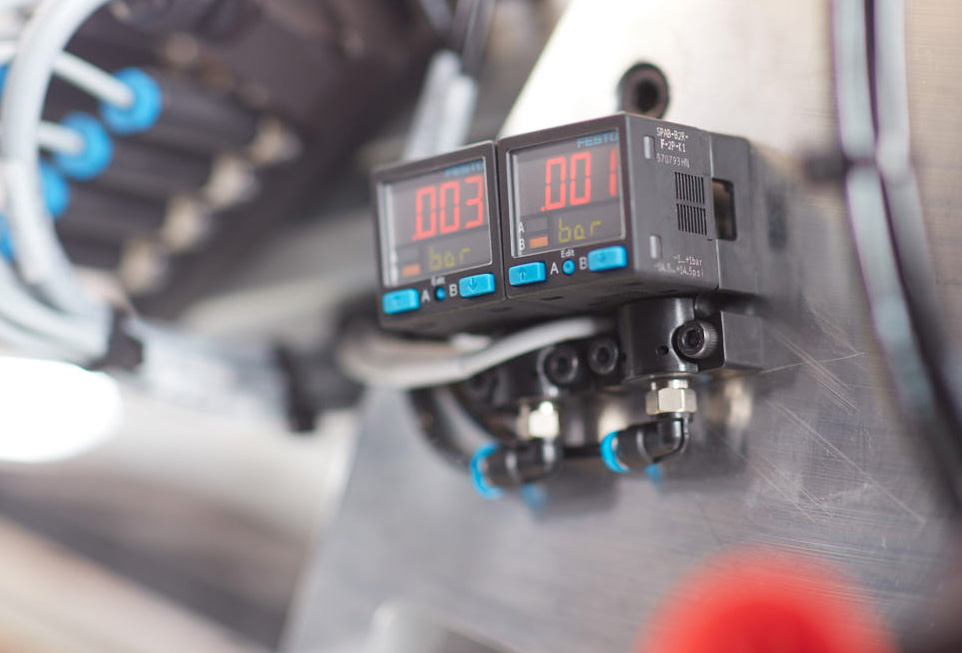
One of the most recent platform investments, 3Button Group (3BG), put direct measurement to the test this year with one of their key customers. While they knew their solutions – optimised robotic automation systems – deliver energy and material savings, the extent was unclear.
To test the savings, they installed two robotic systems for the same task – one with their optimisation technology, called Green Know, and one without. By running the two solutions in parallel, they generated precise, comparable performance data. The results showed that their system saved 800 kWh of energy per year and robot, which is the equivalent of 186 kg of CO₂ avoided emissions, or about eight full charges of an electric vehicle with a 100-kWh battery.
3BG’s validated baseline will now enable Alder to estimate ongoing natural capital savings across all future 3BG deployments. It illustrates how direct measurement can turn engineering improvements into quantifiable environmental and monetary value. In short: 3BG doesn’t just deliver smarter robotic solutions – they provide measurable results that make a real difference.